
UTEX
US STOCKS
5.0/5
Welcome bonus
$100
115 million Indians now hold crypto[KuCoin Cryptoverse India Report, 2022] — and the regulatory framework is settled: 30% tax on gains, FIU-IND regulated exchanges, ₹100 minimum entry. This guide walks you through exchange selection, KYC, and your first investment step by step. You'll also find the best crypto assets to invest in India 2026, strategies for every risk level, and an honest look at how safe crypto investing in India really is.
 Written by Ankit Sharma · Reviewed by CryptoInvestIndia Editorial Team
Affiliate link. Crypto products are unregulated and high-risk. Not financial advice — DYOR.
⚠ Sponsored / Affiliate Disclosure: The offers below contain affiliate links. We may earn a commission at no extra cost to you. Not financial advice — do your own research (DYOR).
Vetted for security, INR support and fees.
$100

for crypto

Fast delivery

10% discount
You've seen crypto explode over the last few years — and for good reason. It's one of the fastest-growing financial sectors in the world. But before you jump in, it's important to understand both sides of the coin.


Our golden rule at CryptoInvestIndia is simple: never invest more than you are willing to lose.
This is the first question every Indian investor asks.
Yes. As of 2026, it is not illegal to buy, sell, or hold cryptocurrency in India. The Supreme Court overturned the RBI's 2018 banking ban, and since then the industry has operated openly.
However, cryptocurrency is not "legal tender." You cannot pay for groceries with Bitcoin (unlike the Rupee). It is treated as a Virtual Digital Asset (VDA), similar to how you might own stocks or digital gold.
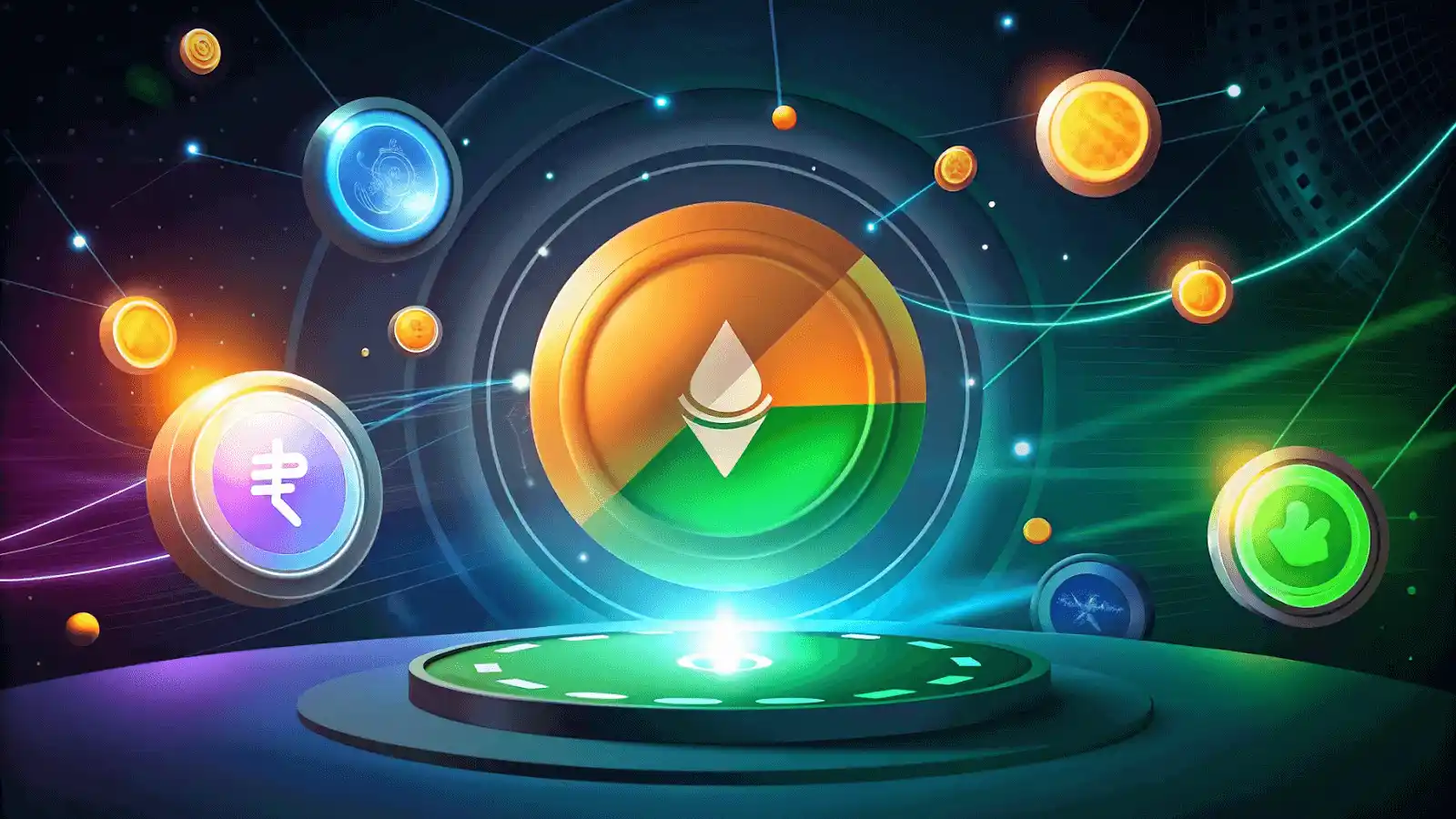
The Indian government has provided clarity through taxation. This is how they regulate the market:
| Transaction | Details | Tax implication |
|---|---|---|
| Buy | 1 ETH at ₹200,000 | No immediate tax |
| Sell | 1 ETH at ₹250,000 | ₹15,600 tax (30% = ₹15,000, +4% cess ₹600, on ₹50,000 profit) |
| Transfer | Between wallets | No tax (non-sale event) |
| Swap | BTC ↔ ETH | Taxable on any gain |
Before you buy your first Bitcoin or Ethereum, you'll need a few essentials. Think of this as your crypto starter kit.
You can't trade anonymously in India. Complete your KYC using your PAN Card, Aadhaar Card, and a selfie or live verification.
Needed for INR deposits and withdrawals via UPI, NEFT, or IMPS.
Understand price charts, trading pairs (e.g., BTC/INR), and transaction fees.
Pro tip: start small — ₹500–₹1,000 is enough to learn the ropes.
Always enable 2FA and avoid public Wi-Fi when accessing your exchange.
Crypto investing isn't a one-size-fits-all game. There are different ways to grow your money depending on your risk tolerance, time horizon, and level of involvement.
Spot trading is the foundation of crypto investing. You buy a cryptocurrency at its current market price and either hold it or sell it later. You own a real digital asset directly and decide when to buy, sell, and how long to hold.
Best for: beginners and short- to mid-term investors who want full control. Key tip: don't chase every dip or spike — make a plan and stay disciplined.
A Crypto SIP works like a mutual-fund SIP — small, automated investments at regular intervals. This uses Dollar-Cost Averaging (DCA): you buy more when prices are low and less when high, smoothing volatility over time.
Best for: long-term investors who want consistency without timing the market. Key tip: pick reliable assets like BTC or ETH and commit for at least a year.
When you stake coins like Ethereum (ETH) or Cardano (ADA), you lock them into the network to help validate transactions and earn rewards in return — like earning interest, but with higher returns and no middleman. Funds are locked for a set period.
Best for: investors seeking steady passive income with moderate risk. Key tip: only stake on trusted platforms or official wallet staking options.
Through DeFi apps you can lend, borrow, trade, or earn interest directly from your wallet, 24/7 — no banks or brokers. It's powerful but complex: smart contracts replace institutions, and one coding bug can cause losses.
Best for: tech-savvy investors. Key tip: use audited platforms like Aave, Compound, or Uniswap — and never lock all your assets in one place.
NFTs represent ownership of unique digital assets — art, music, collectibles, virtual land. GameFi lets players earn real crypto rewards through gameplay. These sectors are now maturing toward real utility.
Best for: creators, gamers, and early adopters. Key tip: only invest in ecosystems with proven user bases and transparent teams.
"HODL" is the most time-tested approach: buying solid assets and holding for years. It's about patience, conviction, and understanding that temporary dips don't define the bigger picture.
Best for: investors who believe in crypto's long-term potential and don't panic-sell. Key tip: build a diversified, quality portfolio and hold through cycles, not seasons.
No one can predict the future. The "best time" to invest in Bitcoin was 10 years ago; the second-best time is when you have a long-term plan. Here's the 2026 context:
The bottom line: trying to "get rich quick" is a bad idea. But if you believe in the long-term potential of this technology, 2026 is a strategic time to start building a position using Dollar-Cost Averaging (DCA).
If you're ready to begin your crypto investment journey, here's a clear, structured process to get started safely and confidently.
Choose a reliable platform to buy, sell, and store crypto. Look for exchanges registered with India's Financial Intelligence Unit (FIU). Popular options include CoinDCX, WazirX, CoinSwitch, and global platforms such as Bybit (accessible via peer-to-peer INR deposits). Read our Bybit India review and claim your bonus.
Pro tip: always verify the exchange has transparent fees, responsive support, and strong security.
To comply with Indian regulations, every user must complete Know Your Customer (KYC) before trading. You'll typically need your PAN Card, Aadhaar Card, and a selfie or live video verification. Once approved, your account is activated for deposits and withdrawals.
Link your Indian bank account to enable smooth INR deposits and withdrawals through UPI, IMPS, NEFT, or RTGS. Always double-check your bank details before transferring funds.
Deposit a small amount to begin — even ₹500–₹1,000 is enough. Start with an amount you're comfortable experimenting with; the goal at this stage is to learn how the system works.
Congratulations — you now own your first digital asset.
Security is the cornerstone of responsible crypto investing. You can store assets in:
| Feature | Hot Wallet | Cold Wallet |
|---|---|---|
| Internet-connected | Yes | No |
| Security risk | Higher | Lower |
| Accessibility | Instant | Slower |
| Best for | Daily trading | Long-term holding |
Always enable Two-Factor Authentication (2FA) and, where available, use withdrawal whitelists for added protection.
Monitor your investments through apps like CoinMarketCap or Delta. As you gain confidence, diversify with multiple assets or set up a Crypto SIP to invest small amounts consistently.
In India, crypto profits are taxed at 30%, with an additional 1% TDS on transfers above the Section 194S threshold (₹50,000/FY for most individuals; ₹10,000 in other cases). Keep detailed transaction records for annual tax filings — most exchanges provide downloadable statements.




Join millions of Indian investors on FIU-registered, secure platforms.
Affiliate link · Crypto products are unregulated and high-risk · Not financial advice · 18+
Start with a verified Indian exchange such as CoinDCX, WazirX, or CoinSwitch. Complete your KYC using your PAN and Aadhaar, deposit INR via UPI, and begin with small amounts — ₹500 or ₹1,000. Learn by doing, not guessing.
To invest safely: use only FIU-registered exchanges, enable 2FA and strong passwords, store long-term holdings in hardware wallets like Ledger or Trezor, and avoid "guaranteed profit" schemes.
Link your Indian bank account to a crypto exchange. Once verified, deposit funds via UPI, IMPS, NEFT, or RTGS and buy Bitcoin, Ethereum, or other assets in INR — as easy as any stock trading app.
For beginners, the best strategy is Dollar-Cost Averaging (DCA) — investing a small, fixed amount (like ₹1,000 weekly). Stick to established coins like Bitcoin (BTC) and Ethereum (ETH) for stability.
Yes. Investing in cryptocurrency is legal but regulated under India's Virtual Digital Asset (VDA) framework. However, it is not legal tender — you can invest and trade, but not pay for groceries with it.
Yes. A 30% flat tax on any crypto profit and a 1% TDS on transfers once you cross the Section 194S threshold (₹50,000/FY for most individuals; ₹10,000 in other cases). You can't offset crypto losses against other income.
You can start with as little as ₹100–₹500. The amount doesn't matter — consistency does. Crypto investing is about learning the system safely, not betting the house.
Yes. Apps like CoinDCX Go, CoinSwitch, and WazirX let you invest directly from your phone, with INR deposits/withdrawals, price tracking, and SIP options.
It can be, if approached smartly. The 2024 Bitcoin halving reduced new supply, and historically the 12–18 months after often bring upward momentum. Combine that with DCA and blue-chip coins to improve your chances.
Register on an Indian crypto exchange, link your bank account, deposit INR via UPI, and buy coins in INR pairs (like BTC/INR or ETH/INR). You can sell anytime and withdraw INR back to your bank.
Exchanges deduct 1% TDS once your transfers exceed the Section 194S threshold — ₹50,000/FY for most individuals (specified persons), ₹10,000 in other cases. Reconcile it via Form 26AS during ITR filing.
Full trade history; wallet logs; exchange TDS certificates; PAN/Aadhaar copies; bank statements; and CSV or screenshot exports.
Popular FIU-IND options include CoinDCX, CoinSwitch and WazirX; Bybit (a global exchange used in India via P2P INR) has spot fees from ~0.1%. The right choice depends on fees, INR deposit methods and security.
Starting your crypto journey in India is now more accessible than ever. While the high returns are attractive, they come with significant risks. By choosing a secure exchange — whether a local platform or a global one like Bybit — and completing your KYC, you can get started.
Remember, education is your best tool. At CryptoInvestIndia, we provide clear, unbiased information to help you navigate this new financial frontier. Start small, stay consistent (DCA), and always be curious.
Affiliate link · Not financial advice · DYOR · 18+